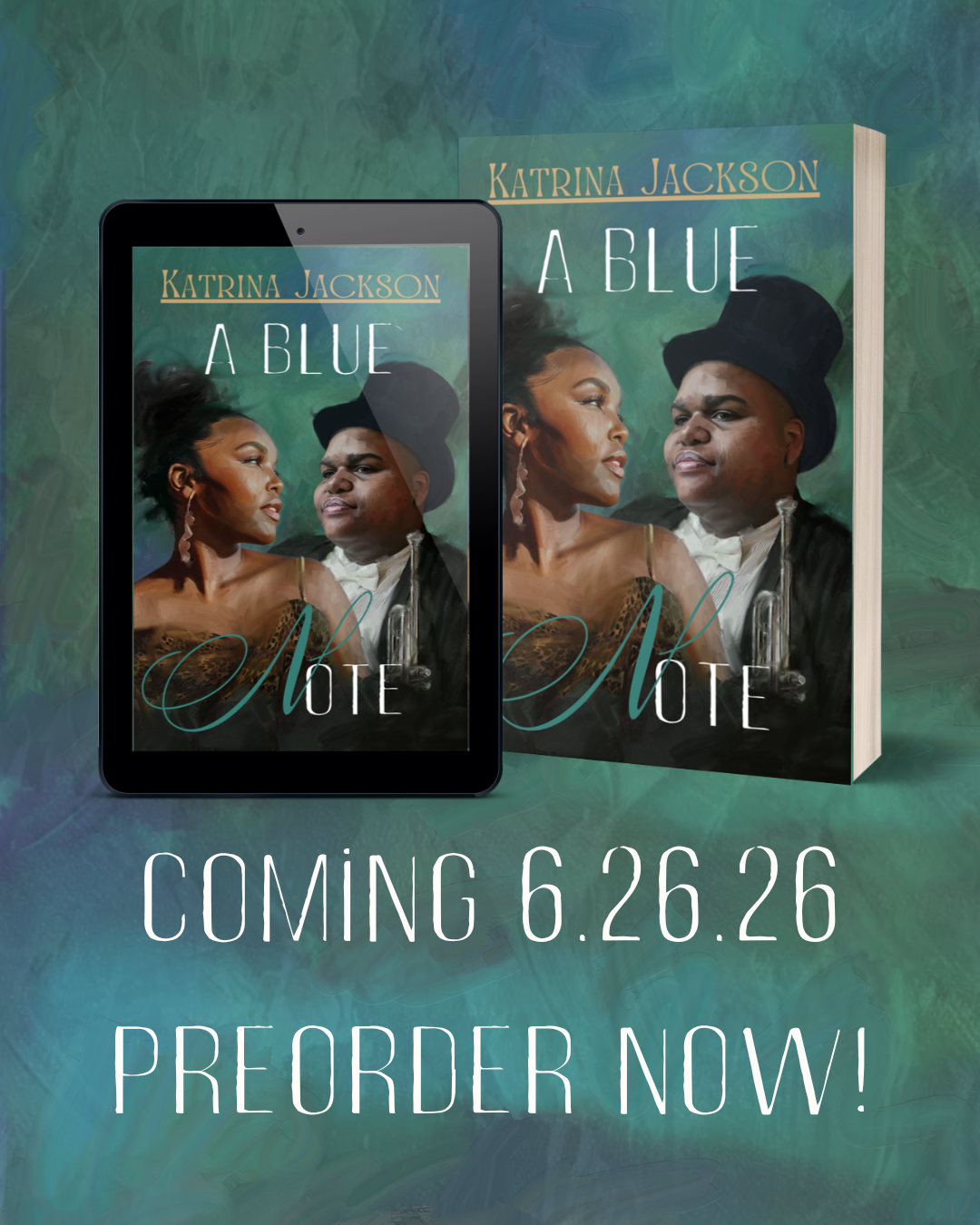
The Cover Worth Waiting For
Figuring out the design for this cover was hard. Like annoyingly hard.
Even though I wasn’t sure yet when I would be ready to release A Blue Note, I was always on the lookout for a cover. I spend a surprising amount of time looking for cover images or pictures and videos for promo. Even now, when I have covers for books I have no idea when I’ll have time to write, let alone release, I’m still looking for images. Sometimes it’s just to recover an old book, like I recently did with the first two books in The Spies Who Loved Her series and the entire Welcome to Sea Port series. In fact, I started working on these new covers in 2022 with A Blue Note in mind.
My first idea was to work with Dria Andersen to do a custom photo shoot. I love Dria’s photography. Before I even knew her, I’d used her photograph on the cover of Every New Year and it still makes me smile whenever I see it. We got all the way to casting but couldn’t find someone who fit my idea of Paule, and that was the sticking point.
It’s rare that I get a cover image that looks exactly how I imagine the characters, even with the illustrated covers. I’m beholden to available stock photos, so I stick with images that are visually striking and communicate the personality of the character or tone of the book. Jourdan on the cover of Looking looks (heh) free, Alejandro on the cover of Office Hours looks serious and smoldering while Mike on the cover of Sabbatical looks soft and gentle, and the image of Alonzo on the cover of Back in the Day highlights his gray hair and dignity. These covers might not have a clinch or a cute little illustrated cartoon, but I think they communicate what I love most about the books and the romances inside them.
But sometimes I get lucky. I loved the original cover of From Scratch because it captured Mary in my mind — thick, sexy, and happy — but I wanted to see Mary, Knox, and Santos on the new cover. For someone who writes so much damn polyamorous romance, I wanted one book with all the people in the relationship on the cover and I finally got it. Also, the new illustrated covers convey something the original cover couldn’t: these three people love each other and they have fun doing it.
After Dria and I couldn’t figure out the photo shoot, I reached out to a friend whose art I love, but she didn’t think she had the time to do it, so I set the book and cover aside. I wasn’t ready anyway. I considered an illustrated cover but for a variety of reasons, I knew the artist who’d done the new art for Welcome to Sea Port wasn’t right for this project. I love that art because it’s fun and light (like the series…for the most part), but A Blue Note has an entirely different vibe. Like the music that inspired it, A Blue Note is quiet and gentle sometimes, an emotional roar at others, serious in parts, tear-inducing at others, and I knew this book deserved a cover that could convey as much of that as possible. Sometime in 2024 (I think), I had an idea for a cover style I wanted to try, but after a couple months, I put that cover option aside. (I still like the style, but it didn’t work for this book because I STILL couldn’t find an image that looked like Paule. You’ll see the style on something else mafia-related…eventually.)
And then one day, in the pit of hell that was 2025, I was scrolling on reddit. I saw a post from an artist who was thinking of making art their full-time gig and it was beautiful. I told them it would be great for book covers. This was, obviously, selfish (I needed a cover artist!) but I also meant it and slid in her DMs and that’s how we ended up…here!
I didn’t have firm ideas for the cover art, but I knew whatever happened, I needed Paule on the cover. This story is as much about Pauletta as Paule, about the present as the past. One of my least favorite things is the way we tell our (family) histories under the assumption that everyone was straight. Some of this is unconscious (and self-centered). Lots of people in the West think of their family history as a straight (heh) line (or I guess two straight lines) from ourselves and back through each parent, their parents, so on and so forth. The heterosexist and patriarchal privileging of both the nuclear family and our lineage is…not my ministry and it’s not even how families work — certainly not most Black American families, which tend to be, thankfully and beautifully, more robust.
I spent lots of my childhood bouncing between homes with just my mother and older brother to homes with my aunts and cousins. When my brother was acting out as a teenager, he went to stay at my grandparents’ house where he lived with cousins (first and second). My Great Grandparents raised one of their grandchildren as their own, which I’ve known most of my adult life, but it was interesting to see him appear in the census records last year as I researched my family history in Louisiana. In that same family, my grandmother was one of many siblings, but I grew up with her younger sister Dear as a mainstay in my life because they moved to California together sometime during (or after?) WWII. After my grandfather died, my grandmother’s last living sisters, Amy and Jean Esta, came to visit the family in California — which is saying a lot because their sister had been dead for over twenty years by then. While most of the siblings married and had children, Amy and Jean Esta never did. From what I know of their younger lives, the sisters were teachers, and Amy possibly had a penchant for casually fostering children in her community when their families were in need. These informal relationships — in my own family and outside — are one of the reasons why the linear look at family is so foreign to me. Look at all the people we’d lose if I pretended that it was only my mother, father, and grandfather who shaped me into the person I was.
My aunts, grandfather, older cousins, and even my great aunt had a relatively large role in raising me, but you’d miss all that nuance if you only focused on marriages and childbirth. Actually, I discovered almost a decade ago that my grandparents never legally married. I hear it caused a bit of a stir in the family, but I was just doing a little casual research. My bad. My aunts made peace with this discovery…eventually. For me, however, there was nothing to make peace with. My grandfather’s only legal marriage was to the woman he married after my grandmother’s death, but the absence of a marriage certificate doesn’t erase the thirty years they spent together or the four children they raised. And it’s their eldest child who I think, in hindsight, affected how I wrote Pauletta’s relationship with an ancestor she never met.
My uncle died before I was born. He was my mother’s favorite sibling, which made sense. He was her only brother and he was much older; of course she idolized him. He had a troubled youth, but his murder rocked the family. I’ve only ever seen one picture of my Uncle Bubba. In it, he can’t be more than ten years old, with beautiful, even brown skin, the biggest, cutest cheeks, and my family’s almond-shaped eyes. He looks like a bigger version of my brother at about the same age.
I spent my entire childhood hearing about my grandmother and uncle — both passed before I was born. I’ve talked before about what it was like growing up in a family in mourning and how that shaped my relationship with grief. I know far more about my grandmother, but my uncle was always more of a mystery. He was living in Seattle when he was murdered and the family found out he was married only on his death certificate.
My family shared my grandmother’s memory with me through long stories told and retold at almost every family function, usually beginning with, “You look just like your Nana.” But I learned about my uncle in small, sometimes offhand remarks, as if thinking about him directly still hurt in a way I was too young to understand. But they kept him alive for me and his other nieces and nephews, most of us he didn’t live long enough to meet.
Once when I was in college, I was telling my mother that someone in the family had to be queer, based on statistics. I was talking about myself, but not, when my mother started talking about her brother and the one time he brought a girlfriend home who, in hindsight, she thought was trans. I have no idea if his wife was trans, I don’t even know her name or if they were legally married, but I tell this story mostly to show how important family lore is when looking for queer family members. I still have so much more research to do, but looking into my family history perfectly illustrates why imperfect official records can only ever be a fraction of the story. Every record I’ve found so far has had to be cross-referenced with my mother, who checks with her older sisters and aunt (my great aunt Jean Esta). In fact, I’m waiting for time to talk with a cousin about the family tree even though I have no idea how we’re related. I’m sure he’ll tell me eventually.
Family history is Pauletta’s path out of her current bout of depression. Researching Paule gives her something to focus on, but it doesn’t start with the archives. Instead, Pauletta starts her research with the brittle, lovingly stored and preserved stack of letters between Paule and her favorite sister, Hattie, Pauletta’s grandmother, delivered in an unassuming box by way of their youngest sister Adelaide. The last time I saw my Great Aunt Dear, we were at a family get together in Georgia. Dear was getting older and frailer as her dementia progressed. She left the party to rest for a while in her dark bedroom and I went to sit with her, as I so often had as a child. She didn’t quite recognize me so much as she saw my mother and grandmother in my features, which was close enough. Over a decade before, Dear and I sat in another of her bedrooms in California, but that time, she was consoling me about my grandfather’s death while shoving peppermints (his favorite) into my hands.
The truth of families like mine and Pauletta’s is that their edges are sometimes jagged and stretched thin at parts because of the Great Migration, but the bonds are still strong, and I wanted a cover that illustrated that. I know what it’s like to learn lessons from the past and I wanted a cover that reflected that as well. I especially wanted a cover that honored our queer ancestors who left letters and love songs like breadcrumbs for us to follow when official documents were insufficient at recording the beauty of their lives.
Brandie Adams-Piphus brought this all to life for me.